Studio Performance in the Main Hall
1h 30' without intermission
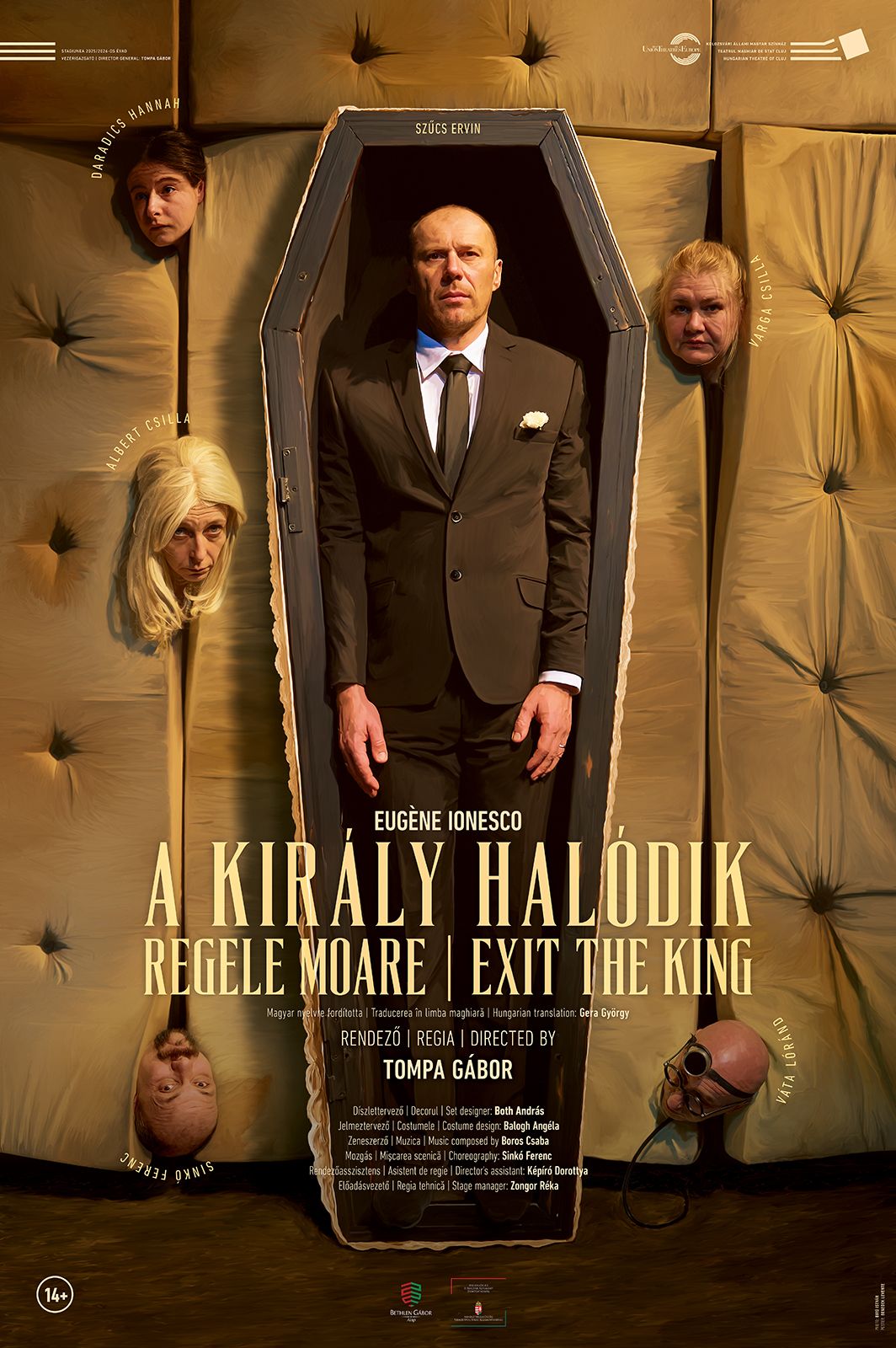
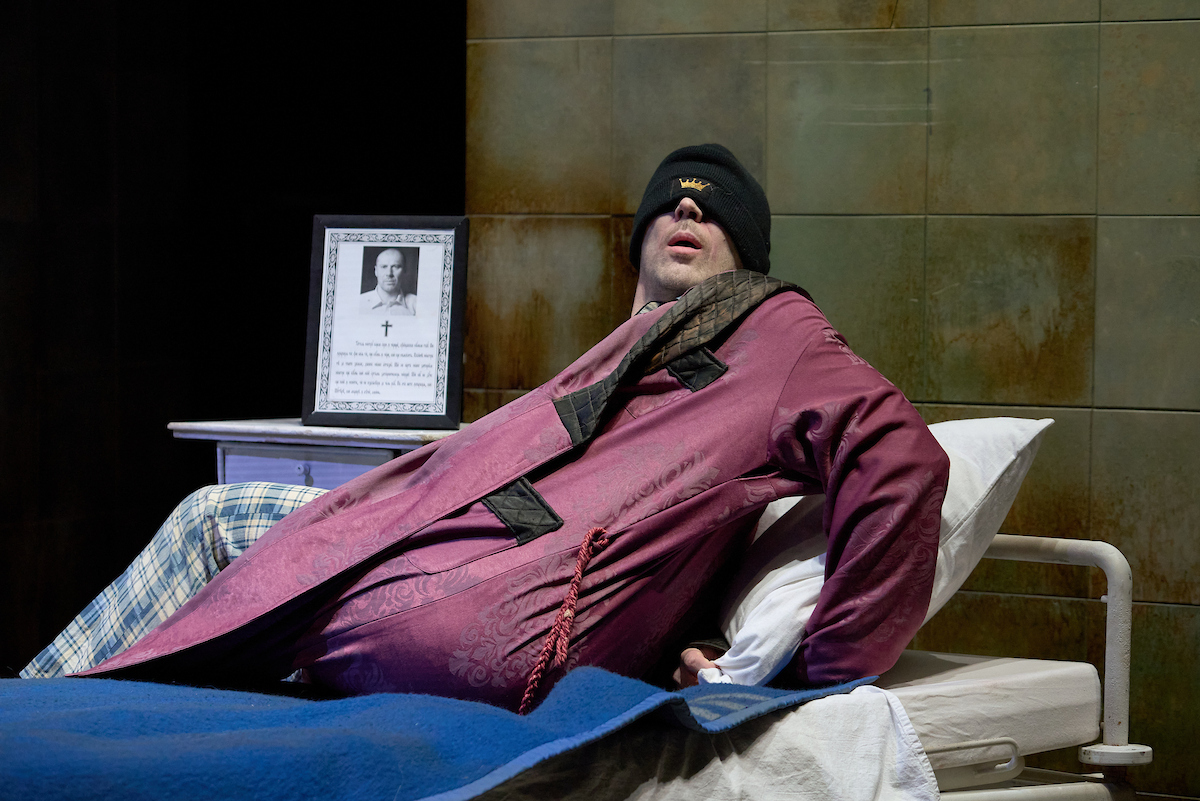
Bérenger the First, the King
Ervin Szűcs
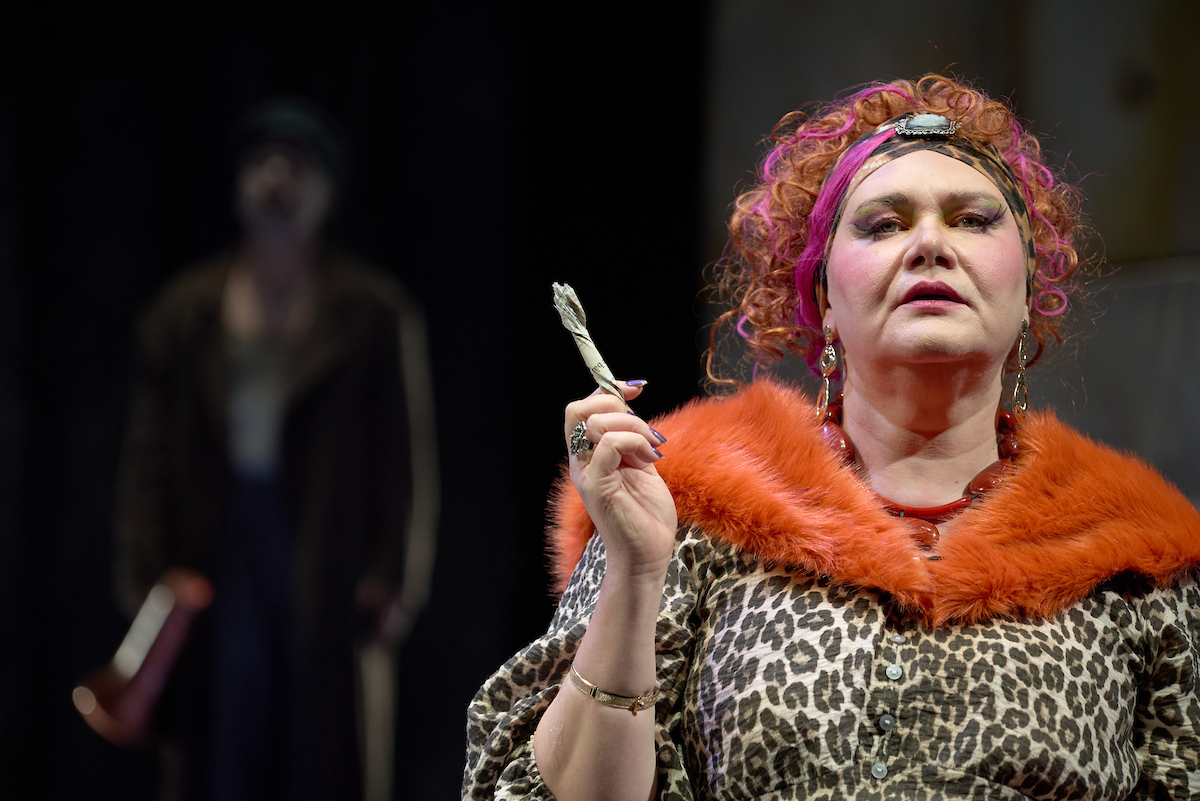
Queen Marguerite, Bérenger’s first wife
Csilla Varga
Queen Marie, Bérenger’s second wife
Csilla Albert
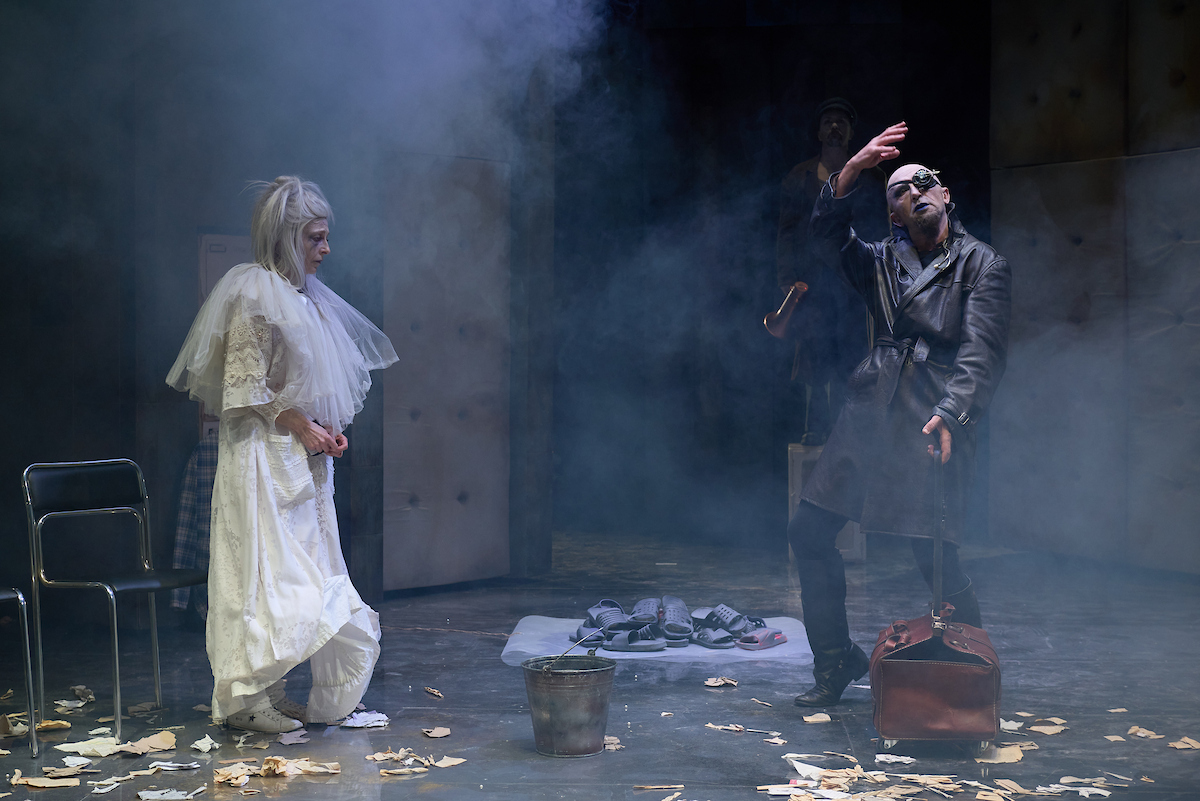
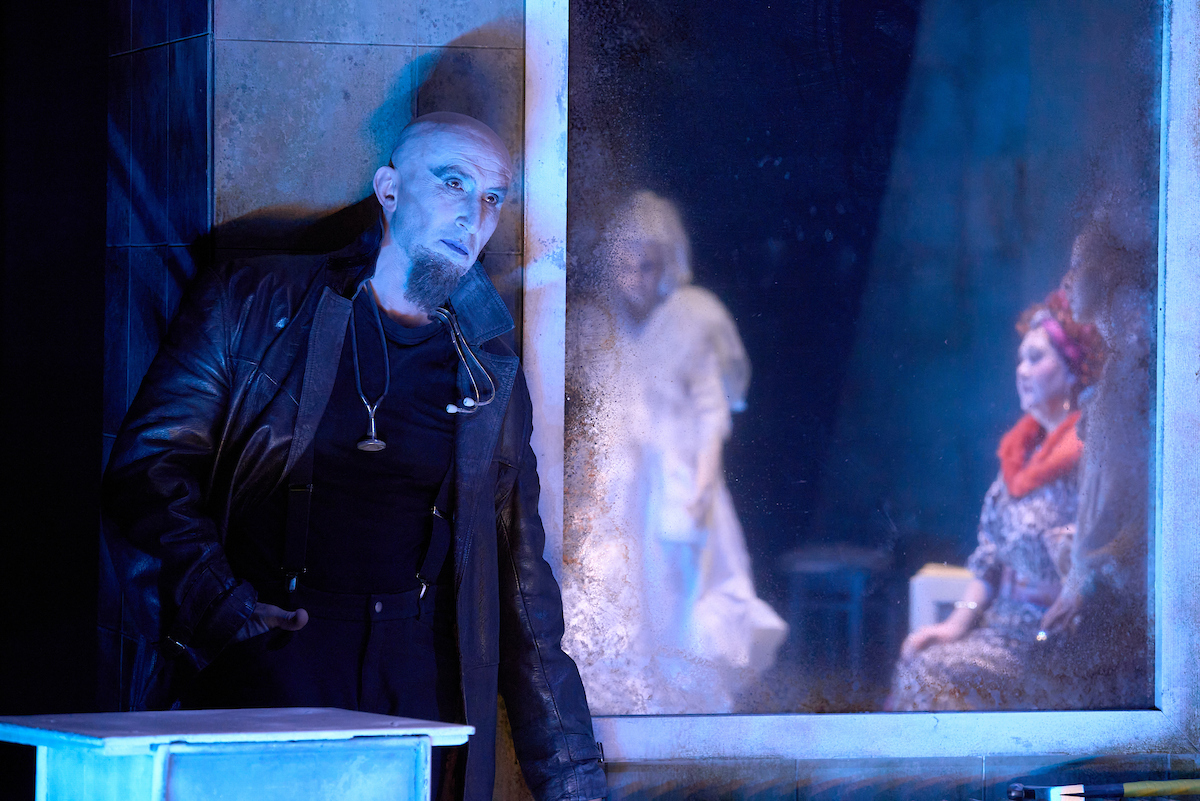
The Doctor, who is also the King’s surgeon, executioner, bacteriologist, and astrologer
Lóránd Váta
Juliette, maid and nurse
Hannah Daradics
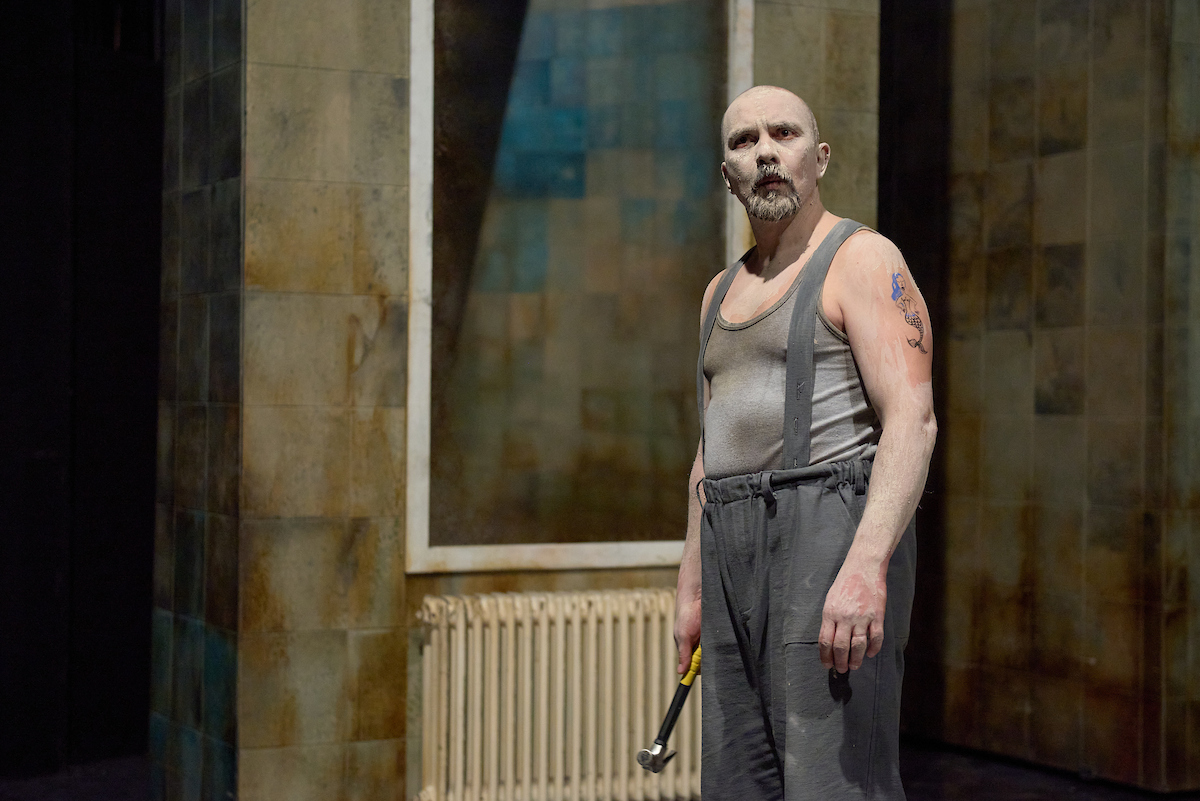
The Guard
Ferenc Sinkó
directed by
Gábor Tompa
set designer
András Both
costume design
Angéla Balogh
music composed by
Csaba Boros
choreography
Ferenc Sinkó
director's assistant
Dorottya Képíró
stage manager
Réka Zongor
light design
Groza Romeo
puppeteer
Ilona Varga-Járó
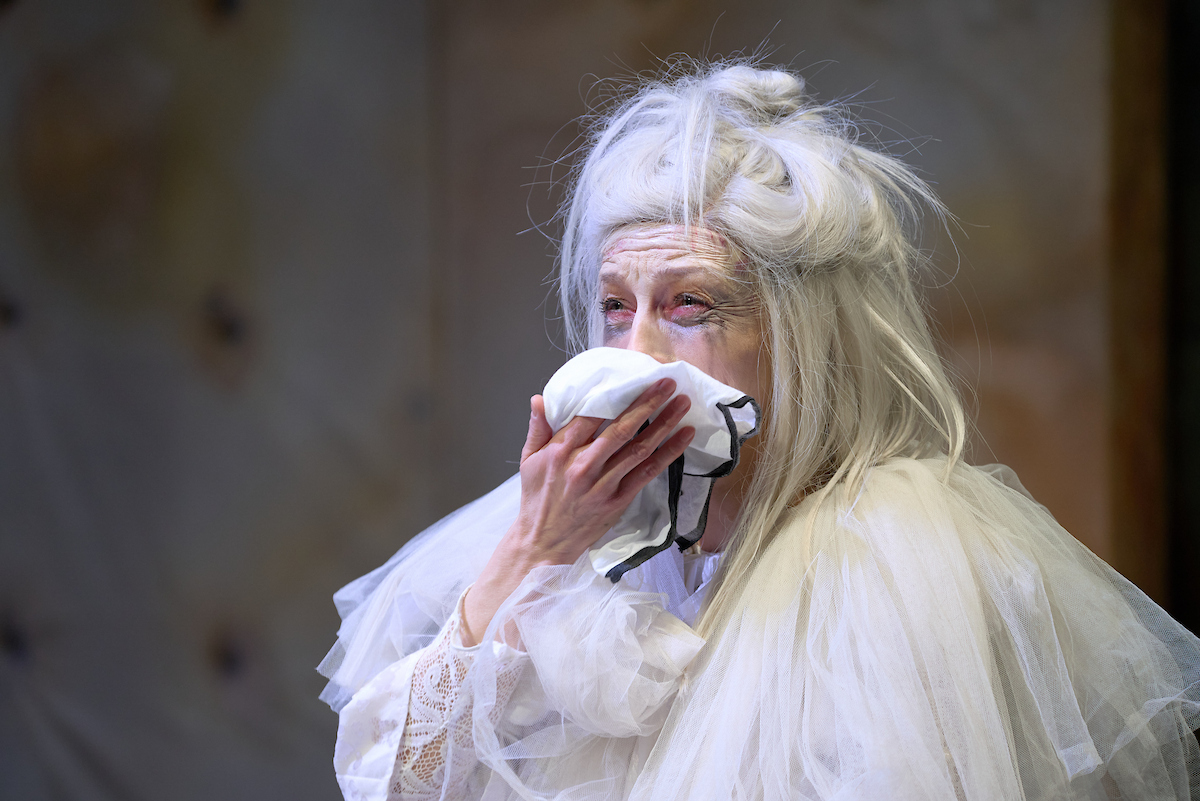
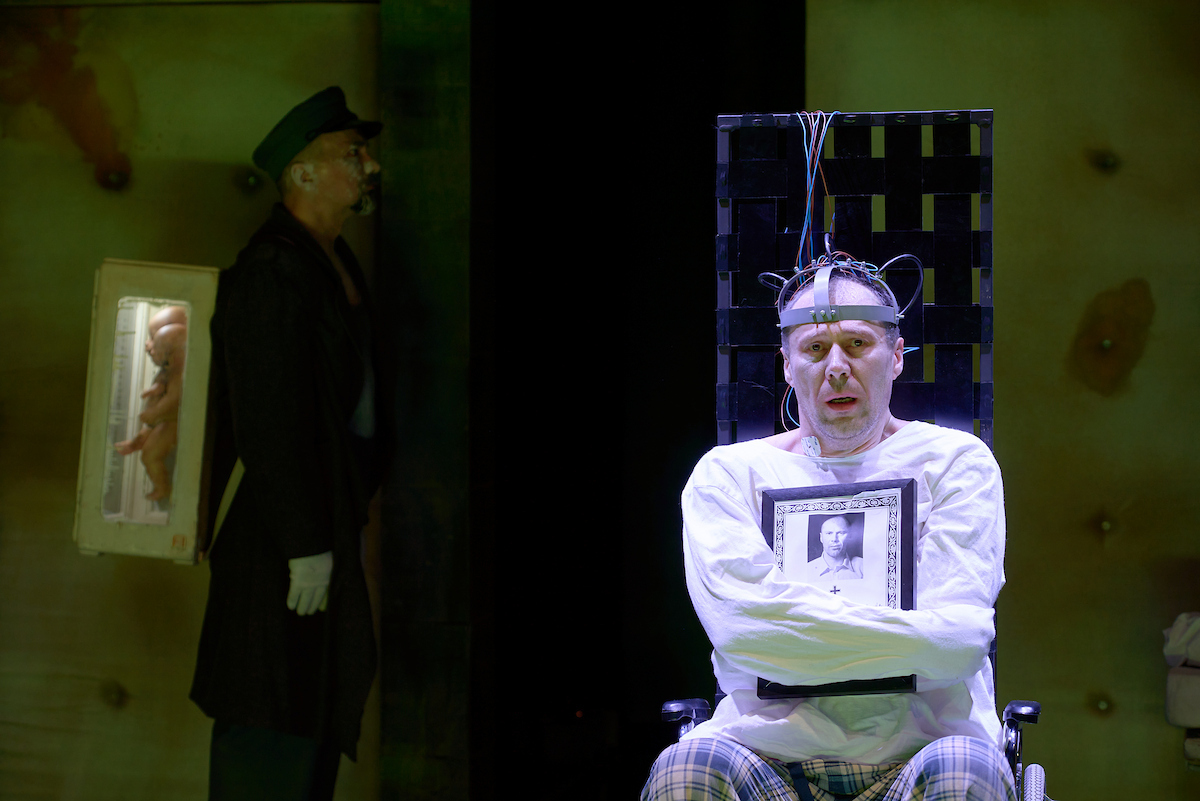
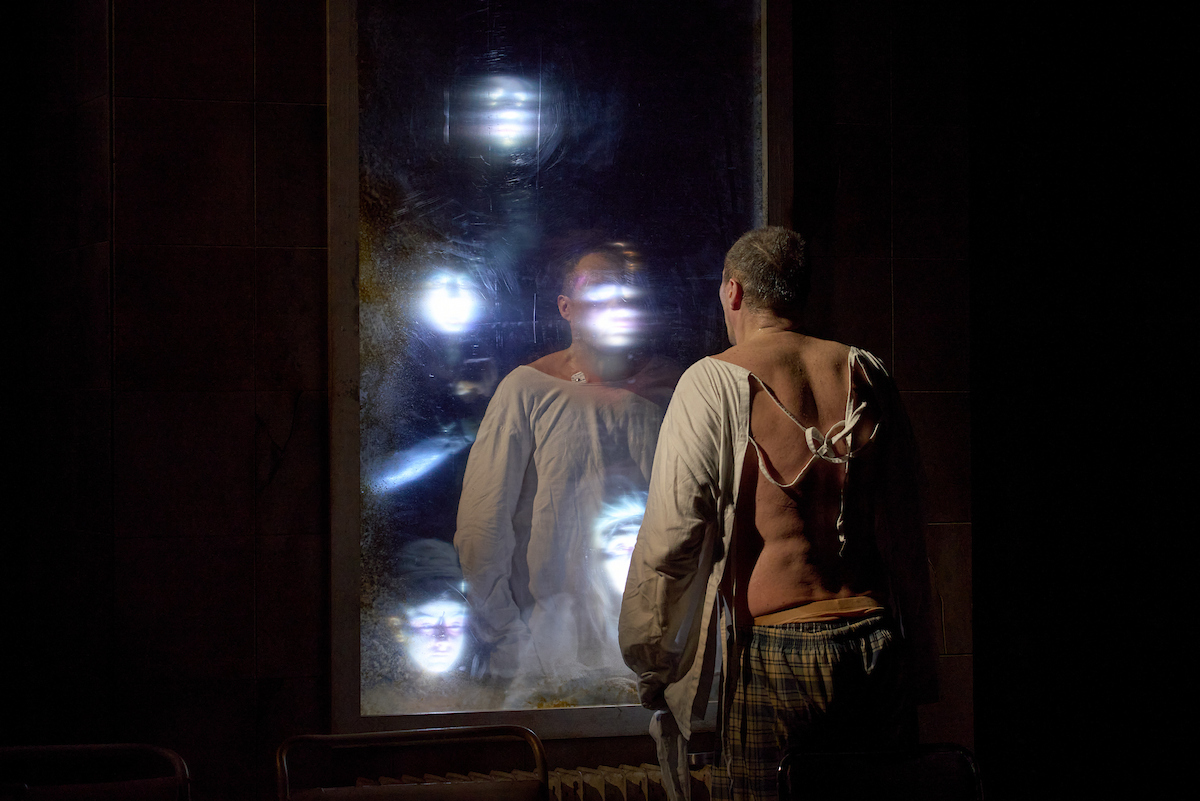
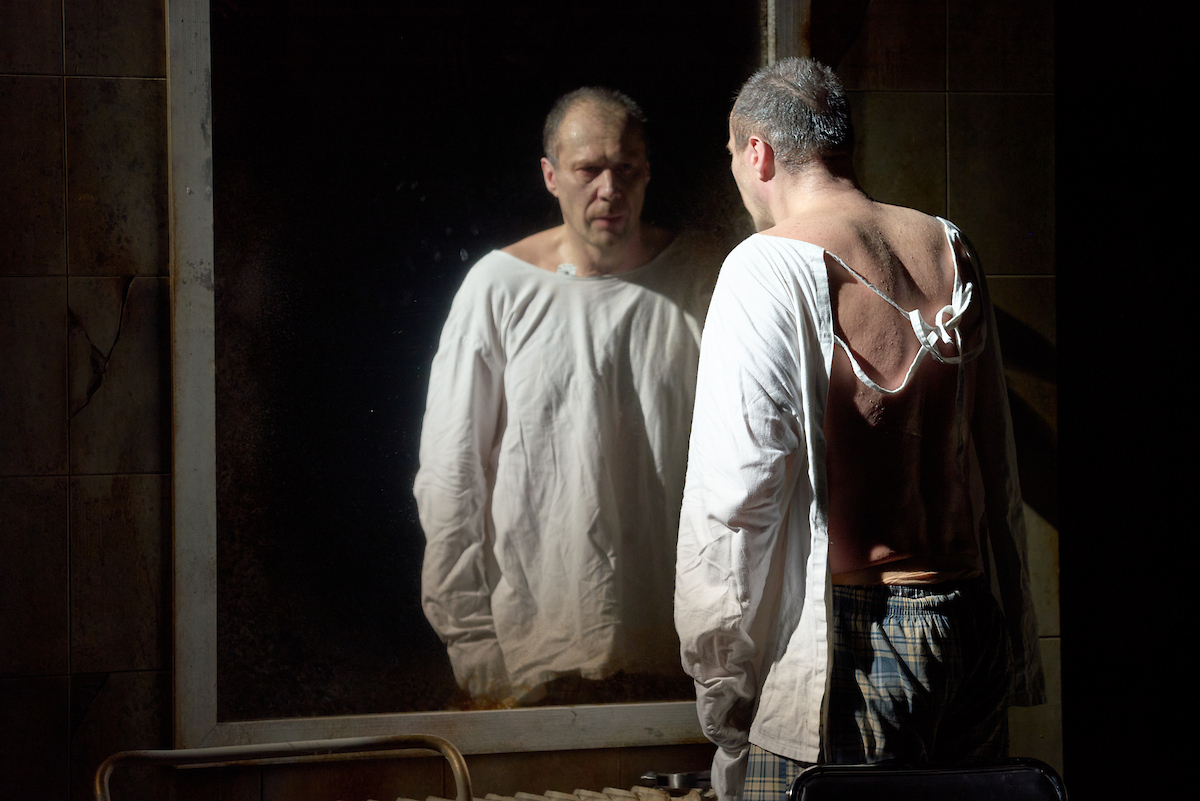
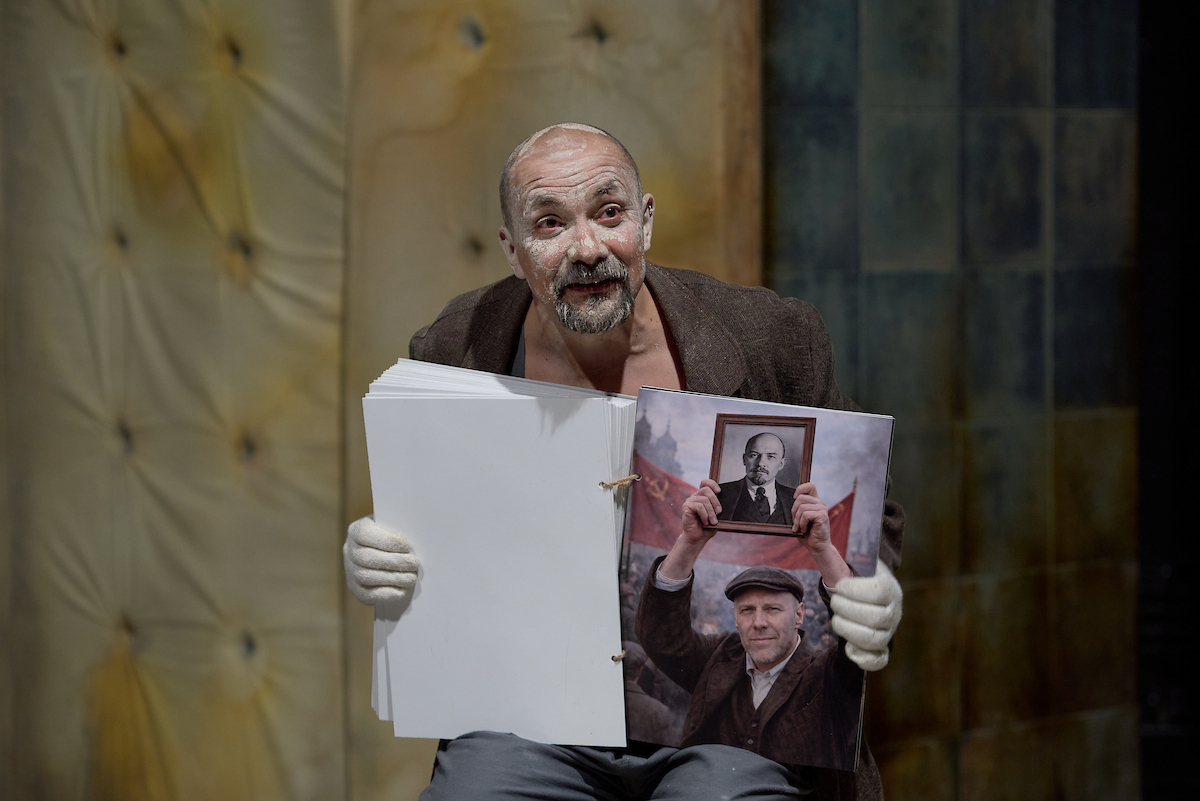
Bérenger, the dying king is really a man just like any one of us, incapable to accept his death and rebellious, who, having regained his strength, turns imperious and arrogant, as if his life and power could last forever; and upon sensing his own weakness, would cling onto anything, be that even the most transparent of lies. Ervin Szűcs excels at portraying these liminalities of human existence. Among the strengths of the production are Csaba Boros’s music as well as András Both’s sets and Angéla Balogh’s costumes.
The Cluj performance of Exit the King places less emphasis on the absurd elements typical of the theatre of the absurd and Ionesco’s oeuvre, instead showing a human community thrown into an absurd environment. Indeed, the absurd fades away by the end of the performance, when even the walls as well as the sky have been sundered, with nothing left but the naked confrontation with the inevitable. As the summary of the performance says in the programme: “Human vulnerability, helplessness and powerlessness – indeed, transience itself can only transcend the realm of the tragically grotesque or the ridiculously absurd if we put our hopes into redemption and believe in resurrection.” It is the above which makes this performance – which draws on György Gera’s Hungarian translation – a continuation, a counterpart as well as a counterpoint to I Am the Wind.
Márta Bodó: „A király halódik úgy abszurd, hogy valójában végtelenül egyszerű” [Exit the King Is Absurd by Being Infinitely Simple], Szabadság, 8 April 2026
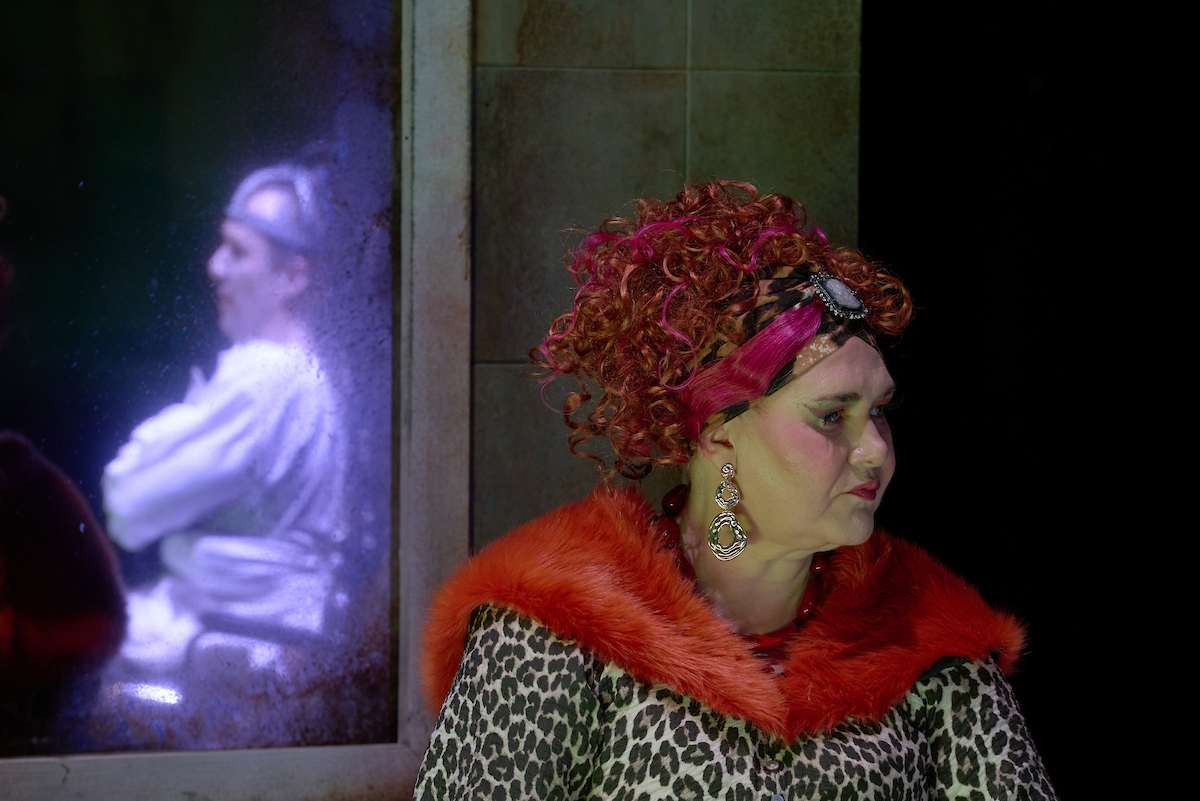
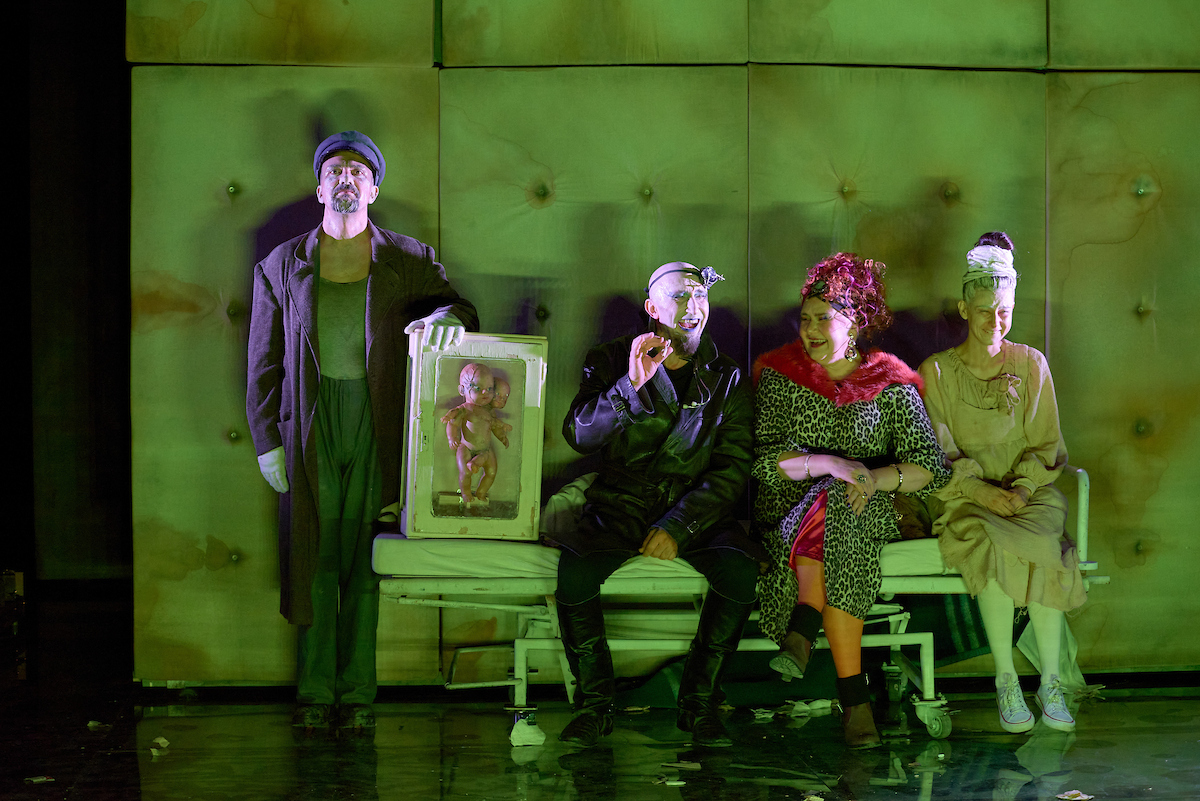
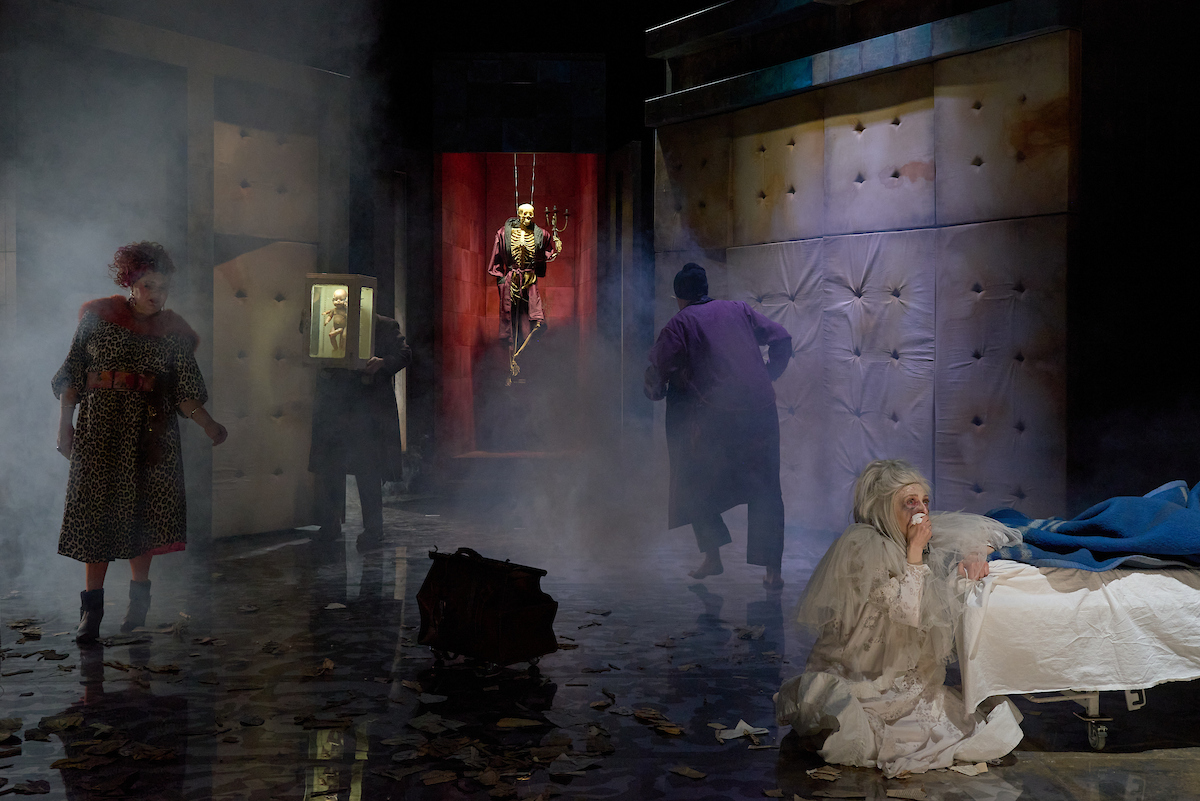
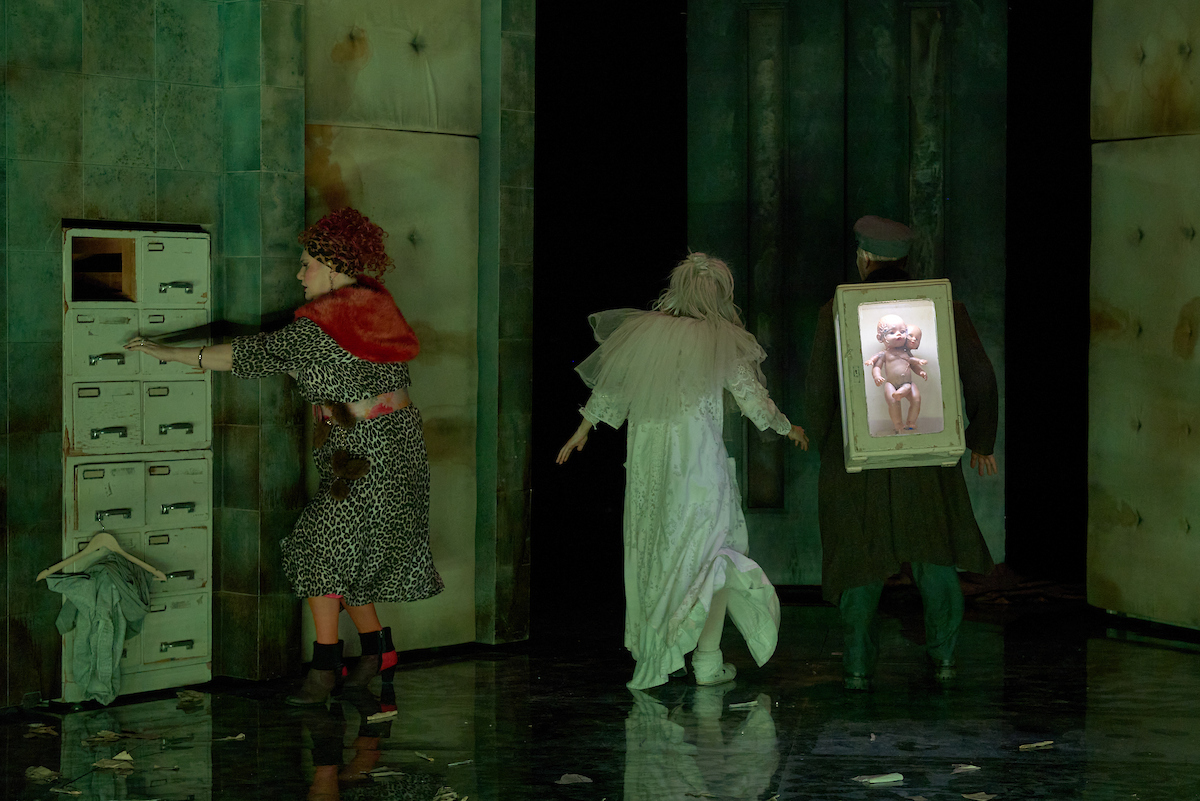
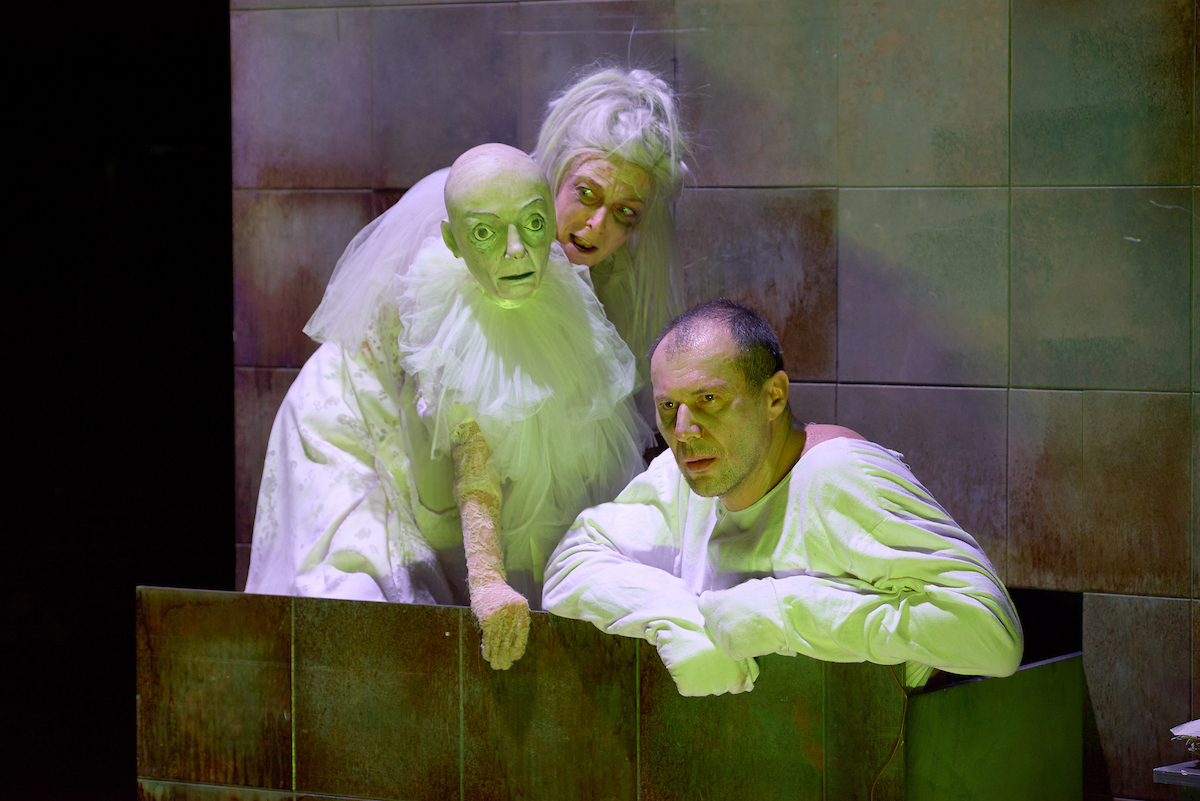
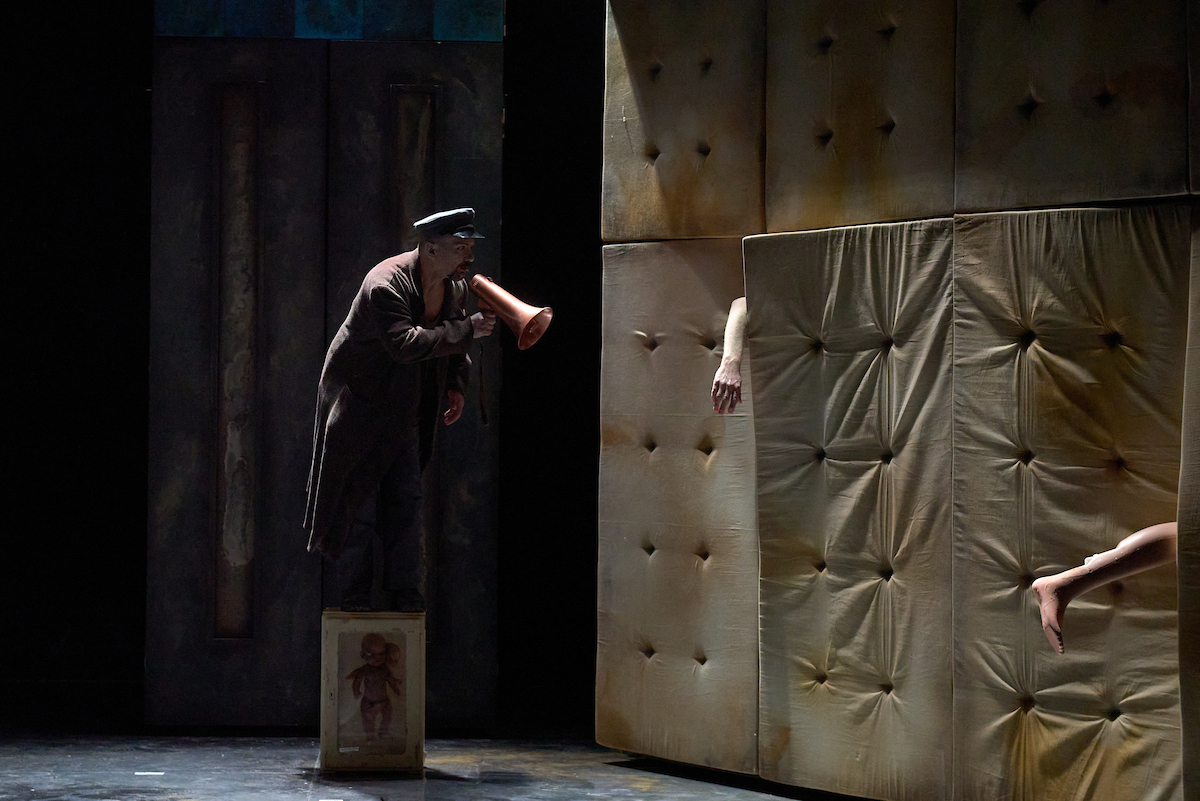
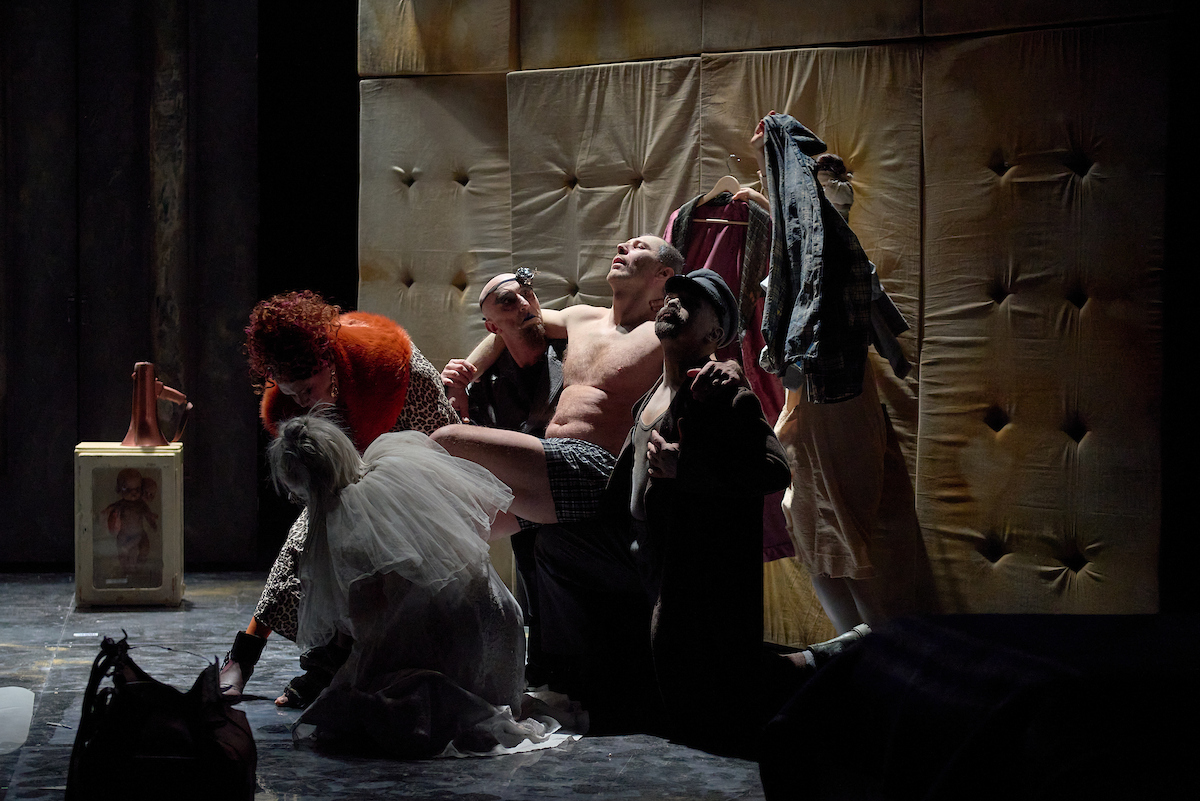
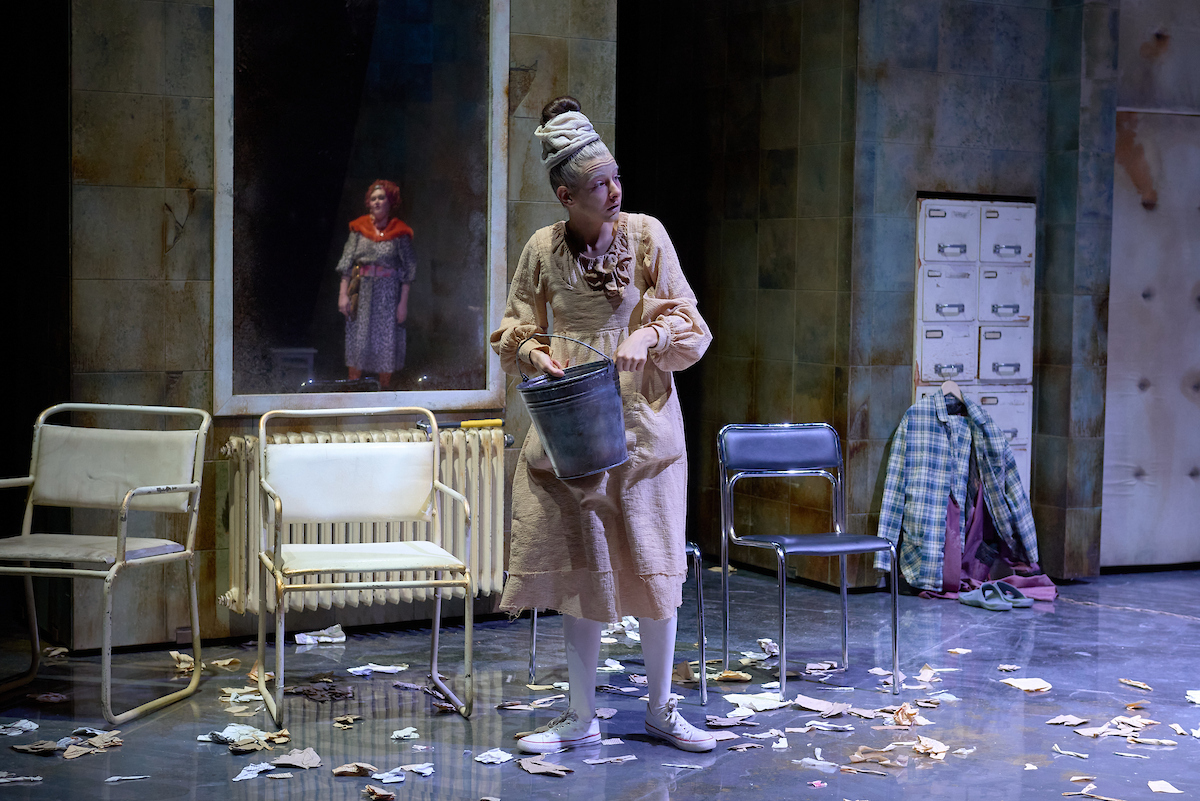
Tompa Gábor’s play is firmly rooted in the present day, partly through its references to current news reports about wars, which underscores the authenticity of the entire scenic framework. Moreover, one senses an extrapolation from the visual depiction of the individual’s existential absurdity to “a world becoming increasingly absurd.” A need is felt to engage in discourse on civic or intimate responsibility experienced in the face of death. It is not only (remembered) events of cosmic destruction that take place, but the obliteration of the human social space as well. We could even talk – as Ionescu also does – of “the dislocation of the real”. How does that translate into stage performance? Through a “set in motion”, as the director had envisaged. Massive, cumbersome rectangular structures, garish papier-mâché props and walls made of mattresses placed vertically flank the performance space like so many threats to the fragility of human existence. The set designer, András Both, suggests a displacement of reality not only by the cracks in the walls, but by shifting or moving them as well. The soundscape, curated by Csaba Boros, featuring a vaguely ceremonial tone, accompanies the actors’ movements, who are led by Ferenc Sinkó. The light design (Romeo Groza) plays a key role in demarcating the scenes. With this new work, Gábor Tompa links Exit the King to his previous production, I Am the Wind, in which the taste of mortality is felt just as acutely, bitterly and morbidly, just as tragically, also imbued with subjective elements drawn from his own biography.
Adrian Țion: Fragilitatea ființei – A király halódik / Regele moare [The Fragility of the Being – Exit the King], liternet.ro, March 2026
Gábor Tompa’s direction – I return to it – “emphasizes the king’s mental decline, the symbolic collapse of the world, the contrast between the characters, the tensions between them, and the king’s ridiculous moments as he clings to power, set against moments of silence and gravity. András Both’s set design is minimalist, with the empty space expressing the sense of an existential void. The costumes designed by Angela Balogh suggest both the characters’ status and the decline they have sunk to. Last but not least, Gábor Tompa’s direction invites the audience to reflect on the meaning of life” as well as on the inevitability of death. The staging itself transforms Eugène Ionesco’s text into a theatrical experience that is as profound as it is unsettling. Against the backdrop of Csaba Boros’s music, accentuating the central theme, death, and highlighting the passage of time, the decay of the king’s imagined universe, the transition from the illusion of power to the stark truth, and the acceptance of reality.
Demostene Șofron: Cum mor capetele încoronate? [How Do Crowned Heads Die?], Făclia, 17 March 2026
Date of the opening: march 11, 2026
Exit the King — apart from the medieval danse macabre tradition — is the only play in world literature that is entirely about the act of dying, and in this sense it is an image, much like Ionesco's early works. Its stage time — defined with minute-level precision right at the outset — is exactly as long as a man's death agony takes. The poetic core of this image is that this man-king, Bérenger, is both the first and the last: as much a king as any of us, first and last on the throne of our own lives, and with each of us an entire empire descends into the grave. Human vulnerability, frailty, and helplessness — mortality itself — can only step out of the realm of the tragically grotesque or the ridiculously absurd if we hold on to the hope of redemption and believe in resurrection.